

Retrofit, Supply, Installation and Commissioning of an Electric Motor-Driven Fire Pump System
- Home
- Lq-project
- Retrofit, Supply, Installation and Commissioning of an Electric Motor-Driven Fire Pump System
project details
Let’s Start Work
Together
Please feel free to contact us. We will get back to you with 1-2 business days. Or just call us now.
About Project
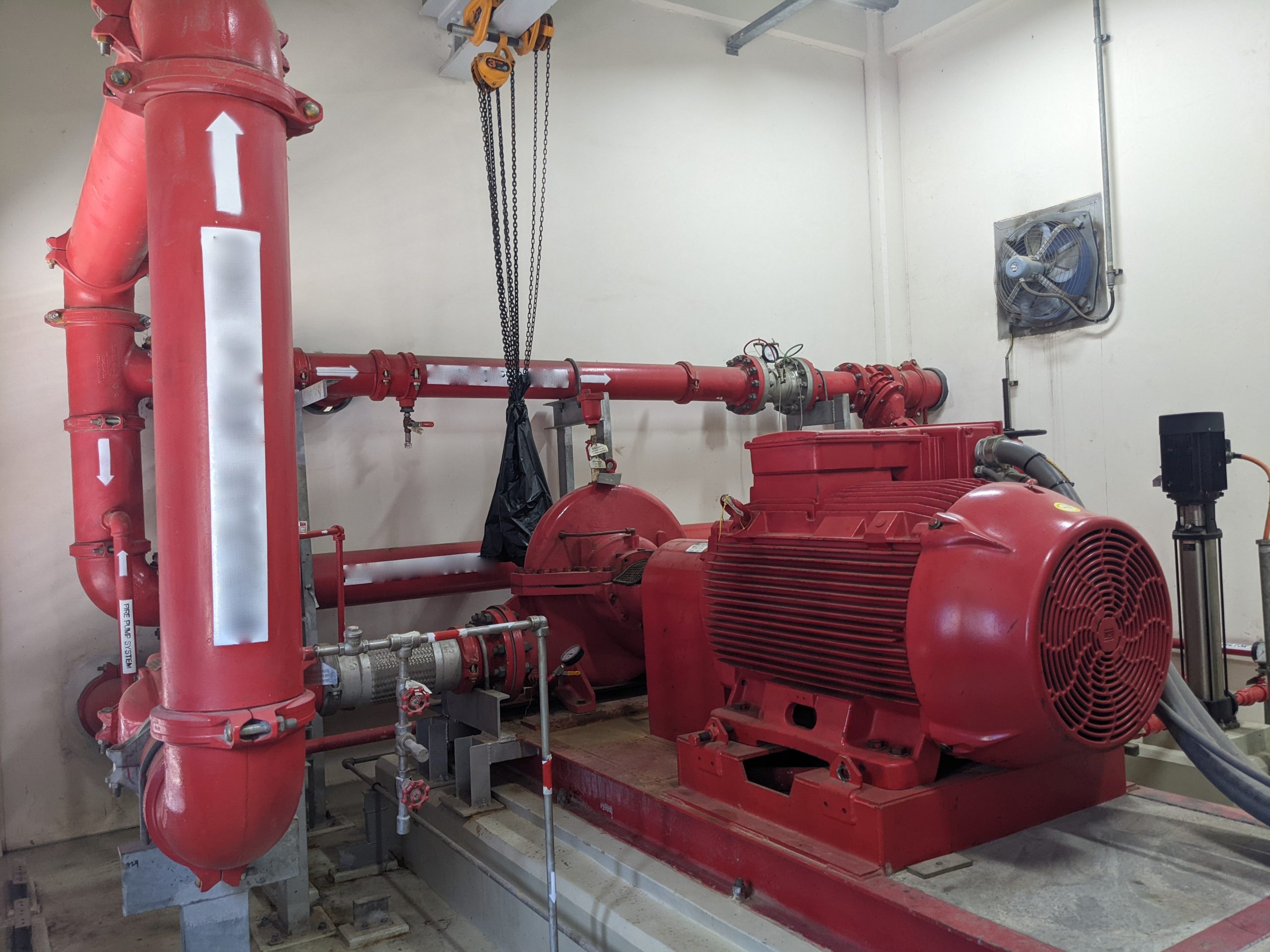
The project involved the retrofit and restoration of an existing electric motor-driven fire pump installation serving an industrial manufacturing facility.
The existing fire-water system required upgrading due to equipment condition, performance limitations, and the need to improve the reliability of the facility’s emergency fire-protection infrastructure. The project included the engineering review of the existing installation, supply of a replacement fire pump and associated materials, modification of piping connections, mechanical installation, system testing, and final commissioning.
The retrofit was developed based on the facility’s required fire-water demand and applicable NFPA fire-pump system principles. The completed installation restored the operational readiness of the fire-water system while retaining usable portions of the existing piping, foundation, and equipment arrangement.
- Main Pump Type: Horizontal Split-Case Centrifugal Fire Pump
- Driver Type: Electric Motor
- Rated Pump Capacity: Approximately 1,500 GPM
- Rated Discharge Pressure: Approximately 100 PSI
- Motor Rating: Approximately 200 HP
- Electrical Supply: 400 V, three-phase, 60 Hz
- Main Pipe Size: Approximately 250 mm
- Pump Arrangement: Main Electric Fire Pump with Jockey Pump
- Starting Method: Dedicated Fire Pump Controller
- System Medium: Fire Water
- System Medium: Fire Water
- Testing Method: Churn, Rated-Flow and Performance Verification
- Design Basis: Applicable NFPA fire-pump and fire-protection system requirements
Our Client’s Challenge
The facility’s existing fire pump had experienced declining performance and reliability concerns. Because the pump formed part of a critical life-safety system, the client required a technically sound replacement and retrofit solution that could be completed with minimal disruption to plant operations.
The project presented several challenges:
- Existing pump and piping dimensions had to be verified on site
- The replacement equipment needed to match the required flow and pressure
- Existing suction and discharge connections required modification
- Pump and motor alignment had to be maintained within acceptable tolerances
- The existing foundation and base arrangement required assessment
- System downtime had to be carefully coordinated
- Testing and commissioning had to confirm reliable automatic operation
- The completed installation needed to follow applicable NFPA fire-pump requirements
The client required a complete package covering equipment supply, materials, installation, testing, and turnover.
Our Approach And Solution
Solcrest conducted a detailed site inspection and engineering review of the existing fire pump system, including the pump arrangement, suction and discharge piping, electrical supply, control interfaces, foundation condition, and available installation clearances.
A replacement electric motor-driven fire pump was selected based on the required system capacity and pressure. The proposed arrangement was coordinated with the existing piping and structural provisions to minimize unnecessary demolition and reduce the facility’s system downtime.
The project scope included:
- Inspection and assessment of the existing fire pump installation
- Review of the required fire-water flow and discharge pressure
- Verification of pump-room dimensions and equipment clearances
- Selection and supply of the replacement fire pump
- Supply of required valves, fittings, flanges, gaskets, and installation materials
- Removal and disconnection of the existing pump equipment
- Preparation and modification of the existing base and foundation
- Positioning and installation of the replacement pump and motor
- Modification of suction and discharge piping connections
- Inspection of the jockey-pump connection and system interface
- Pump and motor coupling alignment
- Electrical termination and motor-rotation verification
- Inspection of fire pump controller interfaces
- Flushing and leak testing of modified piping
- Preliminary no-flow or churn testing
- Rated-flow and discharge-pressure verification
- Monitoring of motor current, pressure, vibration, and operating condition
- Verification of automatic start and stop sequence
- Final testing, commissioning, and project turnover
The retrofit approach retained serviceable portions of the existing system while replacing and modifying the components necessary to restore reliable fire-water performance.
NFPA-Based Engineering Considerations
The retrofit and commissioning activities considered the applicable requirements and accepted practices for fire pump installations, including:
- Dedicated fire-pump service and reliable power supply
- Proper suction and discharge piping arrangement
- Accessible isolation and non-return valves
- Adequate equipment clearances for operation and maintenance
- Accurate pressure indication
- Proper pump and motor alignment
- Automatic fire-pump starting capability
- Jockey-pump operation for system-pressure maintenance
- Performance testing under churn and rated-flow conditions
- Verification of system pressure, motor current, vibration, and leakage
The final installation was tested to confirm that the pump could deliver the required operating performance and respond correctly during simulated fire-system demand.
Project Outcome
The electric motor-driven fire pump retrofit was successfully completed and commissioned within the approved project schedule.
The replacement fire pump achieved the required operating pressure and flow conditions during testing. Pump rotation, alignment, motor current, vibration, pressure readings, controller response, and automatic starting sequence were verified prior to final turnover.
The completed installation restored the reliability and readiness of the facility’s fire-water pumping system. It also improved equipment maintainability and reduced the risk of fire-protection system failure associated with the previous pump condition.
The project demonstrated Solcrest’s capability to execute critical fire-pump projects covering engineering assessment, equipment supply, piping modification, mechanical installation, NFPA-based testing, and system commissioning.