Industrial Process Piping Modification and Pump Tie-In Works
- Home
- Lq-project
- Industrial Process Piping Modification and Pump Tie-In Works
project details
Let’s Start Work
Together
Please feel free to contact us. We will get back to you with 1-2 business days. Or just call us now.
About Project
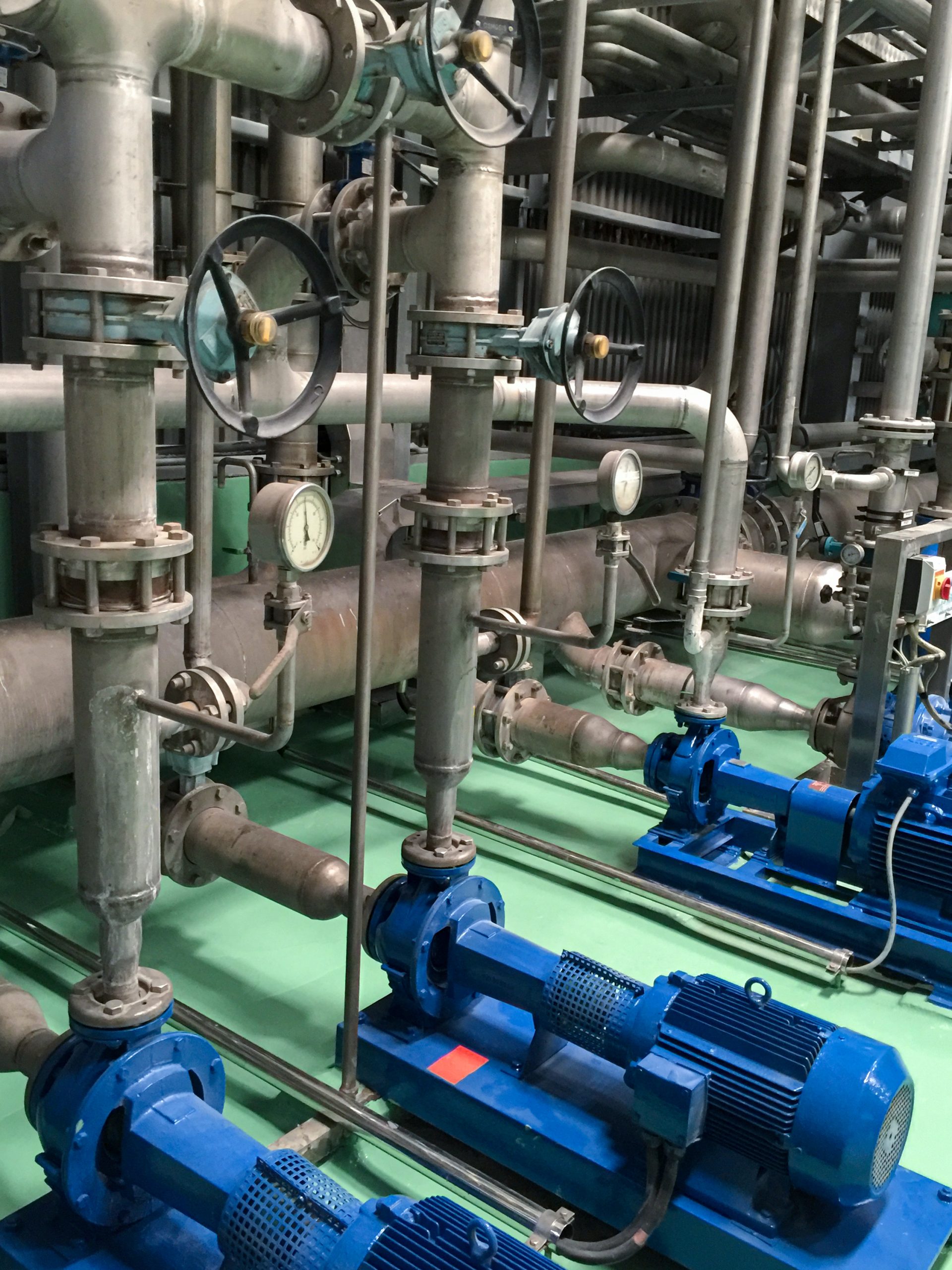
The project involved the modification of an existing industrial process-water piping network and the integration of additional centrifugal pumps into the facility’s operating utility system.
The work was completed to improve water-distribution capacity, provide equipment redundancy, and support increased cooling demand from newly installed production equipment. The existing piping arrangement required rerouting, installation of new suction and discharge headers, and controlled tie-in works to connect the additional pump units without causing prolonged interruption to plant operations.
The project included engineering verification, material supply, piping fabrication, equipment connection, installation of valves and instruments, pressure testing, flushing, and final system commissioning.
Technical Data:
- Piping Sizes: DN50 to DN200
- Main Header Size: DN200
- Piping Material: Carbon Steel, Schedule 40
- Pump Configuration: Two Duty Pumps and One Standby Pump
- Pump Type: Horizontal End-Suction Centrifugal
- Rated Flow per Pump: Approximately 220 m³/hour
- Total Dynamic Head: Approximately 38 metres
- Motor Rating: 45 kW per pump
- Electrical Supply: 400 V, three-phase, 60 Hz
- Design Pressure: 6 bar
- Hydrostatic Test Pressure: 9 bar
- Flange Rating: ASME Class 150
- System Medium: Treated Process Cooling Water
Our Client’s Challenge
The facility’s existing process cooling-water system had limited capacity and insufficient standby capability. Increased production demand required additional pumping capacity, but the modification needed to be completed within a restricted shutdown period.
The work also involved several technical challenges:
- Limited working space around the existing piping system
- Multiple operating lines within the work area
- Restricted shutdown availability
- Alignment of new piping with existing pump connections
- Control of external piping loads on pump nozzles
- Coordination with production, electrical, and civil works
- Safe isolation and reinstatement of existing systems
The client required a carefully planned piping modification that would minimize downtime while maintaining system integrity and operational reliability.
Our Approach And Solution
Solcrest conducted a detailed site verification to confirm the existing piping arrangement, available connection points, equipment elevations, pipe-routing limitations, and shutdown requirements.
A revised piping layout was developed to integrate the additional pump units into the existing suction and discharge headers. The arrangement included isolation valves, non-return valves, pressure gauges, reducers, flexible connectors, drain points, and dedicated pipe supports.
The project scope covered:
- Site measurement and verification of existing piping
- Review of system flow and pressure requirements
- Preparation of piping layout and fabrication drawings
- Development of material take-off and bill of quantities
- Supply of carbon-steel pipes, fittings, flanges, and valves
- Shop and field fabrication of piping spools
- Installation of suction and discharge headers
- Installation of isolation and non-return valves
- Installation of pressure gauges and instrument connections
- Fabrication and installation of pipe supports
- Connection of piping to the centrifugal pumps
- Pump and motor alignment verification
- Controlled shutdown and piping tie-in works
- Welding inspection and dimensional verification
- Hydrostatic pressure testing
- System flushing and cleaning
- Leak inspection and operational testing
- Final reinstatement and commissioning
Pipe supports were installed independently to prevent excessive piping weight and thermal movement from being transferred to the pump nozzles. Final alignment checks were completed after the piping connections were secured.
Project Outcome
The piping modification and pump tie-in works were successfully completed within the approved shutdown schedule.
The upgraded system provided additional pumping capacity and operational redundancy through a two-duty, one-standby configuration. Pressure and flow readings remained stable during commissioning, and the completed piping network passed hydrostatic testing and leak inspection.
The improved arrangement allowed individual pumps to be isolated for inspection or maintenance without requiring a complete shutdown of the process cooling-water system.
The project strengthened the facility’s utility-system reliability while providing sufficient capacity to support expanded production requirements.