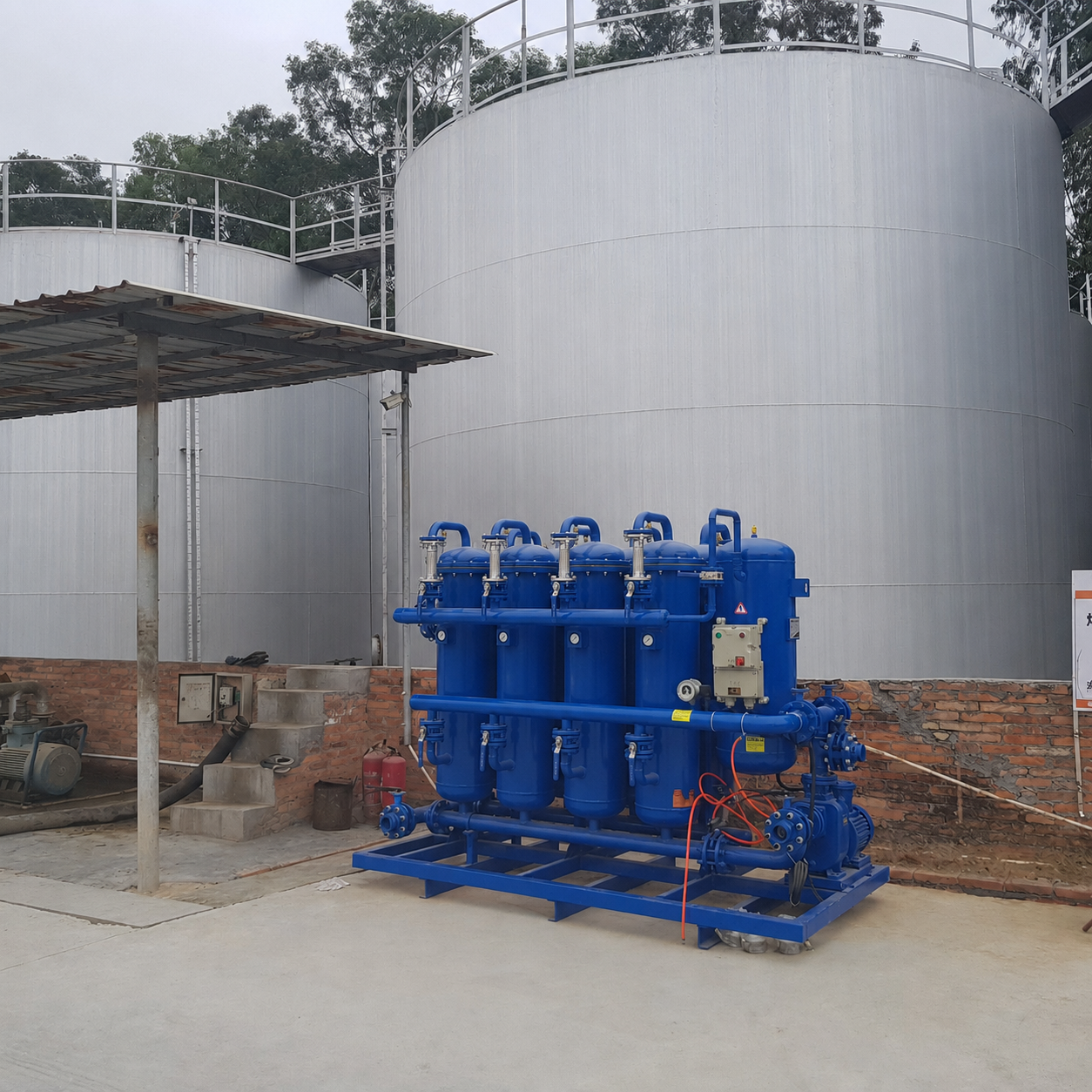
The project involved the engineering and deployment of a customized fuel filtration system to recover Automotive Diesel Oil contaminated by water, sediments, sludge and suspended particulates.
The affected diesel was stored in the facility’s bulk fuel tanks and was intended for use in boilers, generator sets and other critical utility equipment. Complete disposal and replacement of the stored fuel would have resulted in significant financial loss, operational delays and additional environmental handling requirements.
Solcrest developed a controlled fuel-recovery process using a skid-mounted, multi-stage filtration system. The contaminated ADO was continuously withdrawn from the storage tank, passed through progressive filtration and water-separation stages, and returned to the tank until the required fuel condition was achieved.
Estimated Technical Data:
The client discovered visible contamination in its stored diesel fuel, including accumulated water, sediments and dark suspended particles. Continued use of the untreated fuel could have caused premature filter blockage, injector fouling, poor combustion and unexpected failure of critical equipment.
The client required a recovery solution that would:
Solcrest evaluated the stored fuel condition, tank arrangement, available access points, estimated contamination level and operational requirements before mobilizing the filtration equipment.
A temporary recirculation arrangement was installed between the storage tank and the skid-mounted filtration system. Fuel was withdrawn from the lower portion of the tank, where water and heavy contaminants commonly accumulate, and processed through multiple treatment stages.
The project scope covered:
The treatment sequence was monitored throughout the operation to prevent excessive pressure, leakage, air entrainment and the return of concentrated contaminants to the storage tank.
The contaminated Automotive Diesel Oil was successfully recovered through controlled water separation, progressive filtration and continuous tank recirculation.
Visible water, sludge, sediments and suspended particulates were removed without requiring complete fuel disposal or prolonged shutdown of the facility’s utility systems. The treated fuel demonstrated significantly improved clarity and was returned for operational use following the client’s inspection and verification process.
The project provided the client with a practical and cost-effective alternative to replacing the entire fuel inventory. It also reduced the risk of clogged fuel filters, damaged injectors, poor combustion and equipment failure associated with contaminated diesel.
The completed system demonstrated Solcrest’s capability to engineer and deploy customized fuel-recovery solutions for industrial plants, commercial buildings, fuel storage facilities, generator installations and other critical diesel applications.